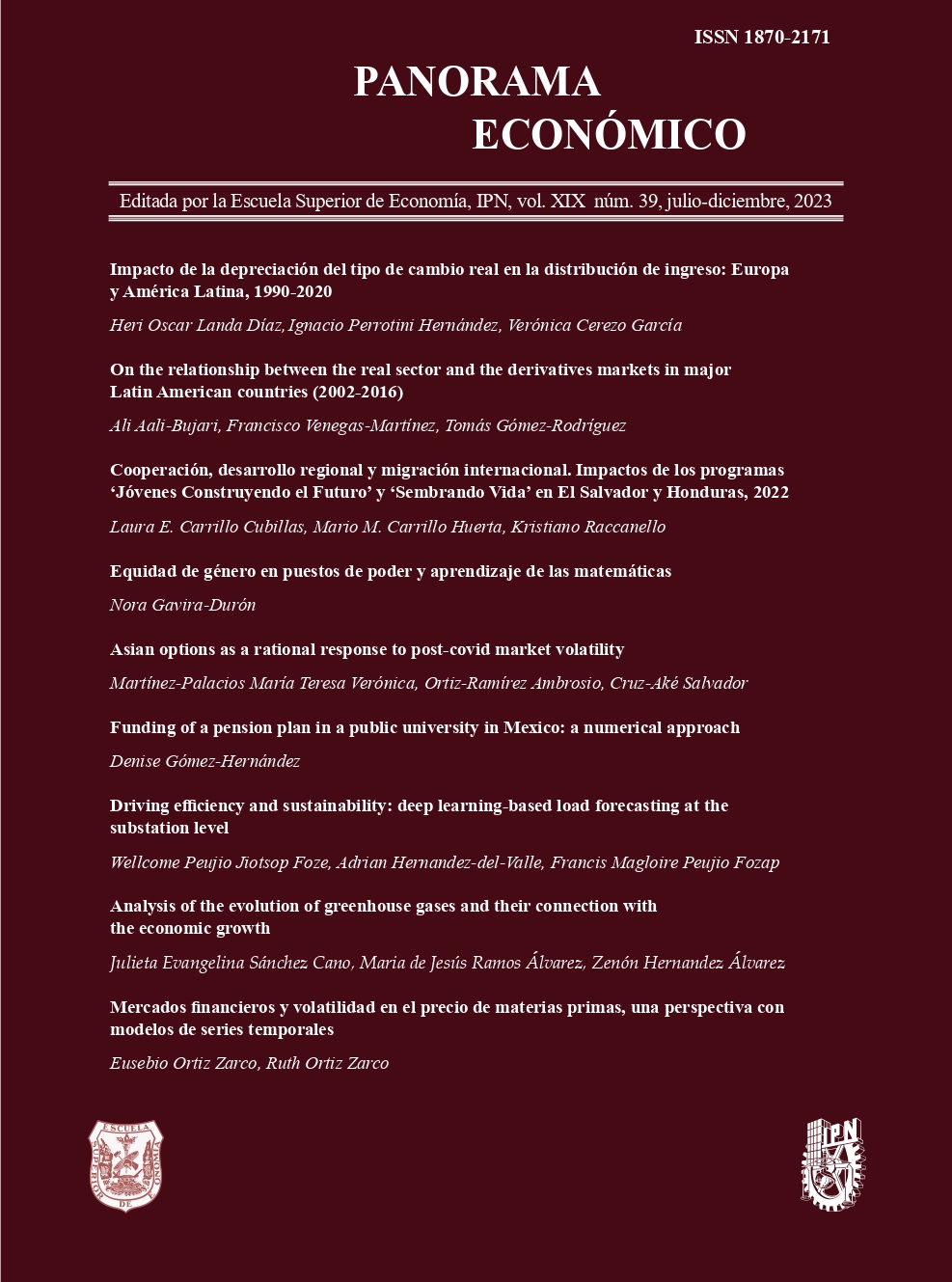
Driving efficiency and sustainability: deep learning-based load forecasting at the substation level
DOI:
https://doi.org/10.29201/pe-ipn.v19i39.176Keywords:
electrical load forecasting, long short-term memory (LSTM), deep learning, substation, energy efficiencyAbstract
This paper presents an investigation into the effectiveness of Long ShortTerm Memory (LSTM) neural networks for forecasting electrical load at a substation level. Electrical load forecasting is a challenging task due to the stochastic nature of time series data, which creates noise and reduces prediction accuracy. To address this issue, we propose a deep learning model based on LSTM recurrent neural networks, which we evaluate using a publicly available 30-minute dataset of real power measurements from individual zone substations in the Ausgrid3 supply area. Our proposed LSTM model with 2 hidden layers and 50 neurons outperforms alternative configurations, achieving a mean absolute error (MAE) of 0.0050 in short-term load forecasting tasks for substations. The findings suggest that the proposed LSTM model is a promising tool for accurate electrical load forecasting, which can be applied to other substations worldwide to improve energy efficiency and reduce the risk of power outages. This paper contributes to the ongoing discussion surrounding the development of reliable forecasting models for electrical load, providing valuable insights for researchers and industry professionals alike.
Downloads
Downloads
Published
How to Cite
Issue
Section
License
Copyright (c) 2024 Panorama Económico

This work is licensed under a Creative Commons Attribution-NonCommercial-NoDerivatives 4.0 International License.